Header-Finding-Home
Header-Finding-Home

Finding Home

The platform for everyone looking for a place to live

The guide to your housing search

Finding a place to live is​​ hard. For people ​with a small budget, it can sometimes feel almost impossible. But you are not alone. Finding Home is here to support and guide you. From preparing your application and looking for a home to signing a rental agreement, you will find practical tips and useful information about renting and housing.

Videos and illustrations by Gurli Bachmann, all rights reserved.

Step 1: Application – Be fast!

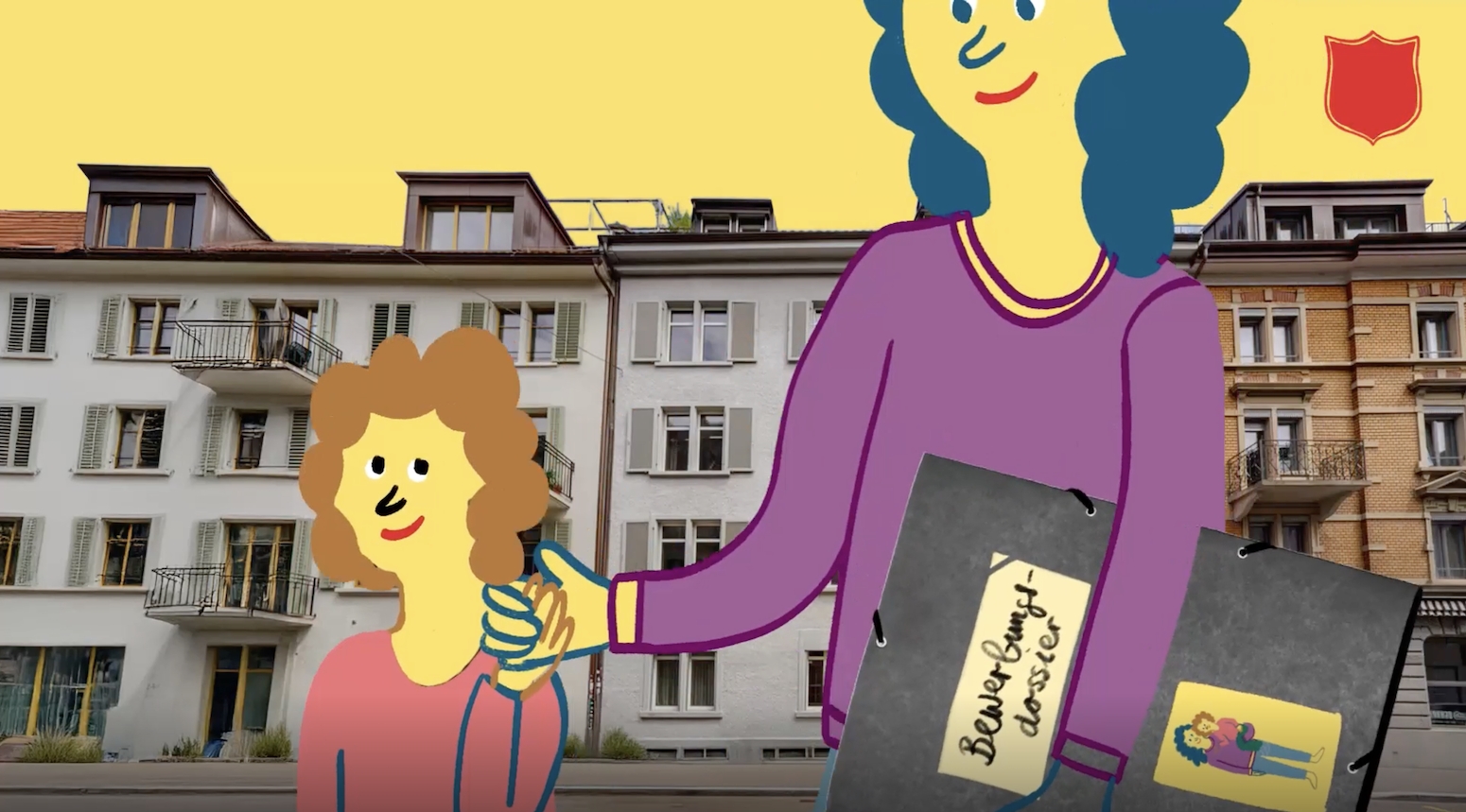
When looking for a place to live, being fast often makes all the difference. Prepare all the necessary documents and get your application ready before visiting a property, so you can submit it immediately after the viewing.

1-be-fast
1-be-fast

Your application: Make a good impression

A well-prepared application can make a real difference. Make sure you include all the necessary documents. Creative ideas can help your application stand out, so don’t be afraid to use them. But above all, focus on getting the basics right: completeness and tidiness.

Checklist application

Completed application form

You will usually get the application form from the landlord at the viewing. For new buildings and properties being rented out for the first time, you may need to apply online. Complete the form carefully and fill in all the fields. Missing or unclear information may make your application seem less reliable. If something does not apply to you, write “none” – for example, if you have no debt enforcement proceedings.

Personal letter

Include a short personal letter (in German or French) with your application. Keep it brief, friendly and honest, and make sure it is clear and easy to read. Your letter should answer the following questions:

✅ Who is applying? (e.g. an individual, a family with children, a couple, etc.)
✅ Age
✅ Occupation / Studies
✅ Reason for moving (e.g. new job, a growing family, termination of your current tenancy, etc.)
✅ Why is this particular place right for you? (e.g. closeness to your workplace, school, family or social network, the right size, etc.)
✅ Pets

  • Tip! If the advert names a specific contact person, address your letter to that person instead of writing "Dear Sir or Madam".

Extract from the debt enforcement register

An extract from the debt enforcement register shows whether a person is or has been involved in debt enforcement proceedings. It helps landlords assess the financial reliability of prospective tenants. The extract is an official document. You can order it from your current municipality of residence, usually online. It must be no more than three months old.

Copy of your ID/passport, or residence permit

If you are a Swiss citizen, include a copy of your ID card or passport. If not, include a copy of your B, C, G or L permit, or another document confirming your right to live in Switzerland.

Proof of income for the last three months

The landlord will usually want to know about your income to make sure you can afford the rent. A common rule of thumb is 3:1, your monthly net household income should be at least three times the monthly rent.

Copy of your personal liability insurance ("Haftpflichtversicherung")

Personal liability insurance covers damage that you or your children cause to another person or their property. Not every landlord requires this insurance or proof of it. However, we strongly recommend taking out personal liability insurance and including a copy of your insurance certificate with your application.

If applicable: Information about your guarantor

If the rent is more than one third of your income, you may need or want to provide a guarantor. This person agrees to cover any unpaid rent if necessary. Students, in particular, are often asked to provide a guarantor – usually a parent. You will need the following documents from your guarantor:

✅ Signed guarantee
✅ Copy of passport/ID, or residence permit
✅ Proof of income for the last three months
✅ Extract from the debt enforcement register

References

References, such as from previous landlords or employers, can help build trust. Important: Do not give someone's name as a referee without asking them first. The landlord is only allowed to contact people you have listed as referees.

  • Tip! Make sure you choose referees that will say good things about you

Step 2: Your housing search – Be creative!

There is a housing shortage in Switzerland. In many cities, the shortage is particularly severe, with fewer than 1 % of homes vacant. Finding a place to live takes persistence – and creativity.

Be-cretive-schritt2
Be-cretive-schritt2

​​​There are many ways to find a place to live

On the major online platforms you will find plenty of listings, but also plenty of competition. Sometimes, the best opportunities come through smaller, more personal or offline channels. Use as many different ways to search as possible. Here are some ideas.

Online platforms

Online platforms offer a wide range of listings and let you set up free search alerts based on your criteria. Here are some of the most important platforms:

📌 Homegate.ch: One of Switzerland’s largest and best-known property platforms. It is often the first place property management companies advertise new listings.

📌 Immoscout24.ch: Another major platform – very easy to use. Tip: Check early in the morning or in the evening, when most new listings are posted.

📌 Newhome.ch: Particularly useful in rural areas. It is less crowded than the major platforms and a good addition to your search.

📌 Urbanhome.ch: Has more listings from private landlords, so you may come across opportunities that are harder to find elsewhere.

📌 Ronorp.net: A classified ads platform, mainly active in larger cities. It has many listings for shared flats and temporary rentals and can be useful for short-term solutions or alternative types of housing.

📌 Flatfox.ch: Search and apply in one place – you can submit your application online. Particularly popular in Zurich.

📌 Tutti.ch / Ricardo.ch / Anibis.ch: Classified ads websites are also a great place to browse and post housing ads.

Facebook, Instagram & Co.

Social media can also be a great way to reach a lot of people. Some tips:

📲 Facebook: Join relevant groups such as “Wohnung gesucht Zürich” (flat wanted Zurich), “WG-Zimmer Bern” (room in a shared flat Bern) or “Günstig wohnen Basel” (affordable housing Basel) and post what you are looking for.
📲 Instagram: Follow hashtags such as #WohnungZürich or #WGgesuchtBern and share your housing search in your stories.
📲 WhatsApp / Signal / TelegramTell your contacts and groups that you are looking for a place to live.

  • Tips for using social media in your housing search Keep your language simple and clear. A photo can make your post more personal and help it stand out. Be open and honest, but stay positive. For example: “I don't have much money, but I'm reliable and tidy, and I urgently need a quiet place to live.” Watch out for scams: Never pay money in advance without a contract or before viewing the property.

Friends, florists, and familiar faces

Sometimes, talking to people works better than searching online. Tell everyone around you what you are looking for: friends, neighbours and colleagues. People at your club, school or church. Your bike mechanic, your florist or post worker.

With permission, put up tear-off flyers in supermarkets, shops, cafés and community centres – anywhere lots of people pass by. Someone may have heard of a place that’s available. And most people are happy to help if they can! Spread the word – you never know where kindness might open a door.

Housing cooperatives and property management companies

Not every available flat is advertised on the major platforms straight away. Housing cooperatives and property management companies may offer them through their own channels first. Contacting them directly could help you find out about available housing sooner.
Some housing cooperatives require a membership fee or the purchase of a cooperative share, which is similar to a deposit.

What you can do:
🗂️ Research: Look for housing cooperatives and property management companies in your area. Their websites may have sections such as “Available homes” or “Apply online”. Some also offer newsletters you can subscribe to.

📝 Get on their radar: Even if there is no suitable flat available right now, you can still submit your application. Some property management companies keep waiting lists and contact registered applicants before advertising a property publicly.

  • Tip! The broader your search criteria, the better your chances. Be open to different types of housing, new areas and alternative solutions!

Step 3: Rental agreement – Be safe!

Before signing a rental agreement, read it carefully. Your signature comes with legal obligations. This checklist will help you spot potential problems and clarify important points.

Vorstellung-be_safe_2

Rental agreement: Key points to check

Are the property details correct?

✅ Address / floor / apartment number
✅ Net rent
✅ Heating and additional costs (advance payments or flat rate)
✅ Gross rent (net rent + Heating and additional costs)
✅ Size (m²)
✅ Included spaces or facilities (basement/cellar, attic space, laundry room, etc.)
✅ Additional rentes spaces (e.g. garage parking space)

Is the initial rent within the legal limit?

Your initial rent may be no more than 10% higher than the previous tenant's rent, unless the property has been renovated or improved in a way that adds value. Ask the landlord or property management company about the previous rent. If necessary, you can challenge the new rent. Get support if you need it, for example from the Swiss Tenant's AssociationYou can even challenge the rent after signing the rental agreement – up to 30 days after receiving the keys.

Do the heating and additional costs seem reasonable?

If the heating and additional costs seem unusually high or low, ask the landlord about the actual costs from previous years. This can help you avoid large additional payments if you pay in advance, or an unreasonably high flat rate. If no additional costs are listed in the rental agreement, they are considered to be included in the rent.

Does the rental deposit meet the legal requirements?

The rental agreement will usually state the amount of the rental deposit. It may not exceed three months' rent, including heating and additional costs. Wait until you have signed the rental agreement before paying the deposit. Always pay it into a blocked account opened in your name specifically for this purpose.

BEWARE of fraudsters: Never pay the dopsit to a private bank account in advance.

Have all defects been properly documented?

Take your time during the handover and make sure all defects are clearly and accurately recorded. They should also be included in the rental agreement. Take photos or videos if needed.

Does the agreement include general terms and conditions or house rules?

If the rental agreement refers to general terms and conditions or house rules, these also form part of the agreement. Make sure you read them carefully. All terms in the rental agreement, the general terms and conditions and the house rules are legally binding, unless they go against the law. If they do, they are not valid – even if you have signed the agreement.

Do I understand everything?

You don't have to work through the rental agreement on your own. If anything is unclear, ask for help or have someone check it for you. You could contact:

✅ the Swiss Tenant's Association
✅ a local advice in your municipality
✅ a trusted person with knowledge of rental agreements

Who signs if several people are moving in?

If several people move into a property together, you need to decide who will sign the rental agreement. There are two main options: a joint tenancy, where several main tenants share the same rights and responsibilities, or a subletting arrangement, with one main tenant and one or more subtenants.

  • Tip! Join the Swiss Tenants' Association! It has offices across Switzerland and offers members a range of services at reduced rates, including advice on tenancy law and support when moving out of a property. Memberships start at CHF 45.- per year - they vary depending on the canton.
Visit the Swiss Tenant's Association

Step 4: Keeping your home – Be careful!

Finding a place to live is one thing. Keeping it is another. If you tackle problems early, know your options and ask for support, you can avoid a lot of stress and protect your home.

wohnungstüre
wohnungstüre

Tips for everyday life after moving in

Pay your rent on time, even when money is tight

A standing order makes sure your rent is always paid on time. If money gets tight, do everything you can to avoid falling behind on your rent; this can quickly put your tenancy at risk. If you are struggling, talk to your landlord and ask for help, for example from an advice service or your local authority. In some cases, you may also be able to arrange a payment plan.

Follow the rules and be considerate

Many buildings have rules about things like quiet hours, laundry or the use of shared spaces. These house rules are part of your rental agreement. Following them helps you maintain good relations with your neighbours and avoid problems with your landlord. If a conflict arises, address it early, calmly and respectfully.

Report damage – don´t ignore it

Repairs are usually the responsibility of the property management company. If something in your home is broken or not working properly, report it straight away. This also applies to smaller issues such as dripping taps or mould in the shower.

Keep your home clean

A clean and well-maintained home is good for you and can also help you avoid problems with your landlord. Air the rooms regularly, keep the kitchen and bathroom clean and dispose of rubbish properly. If you have children or pets, take extra care of floors and walls.

Keep your landlord informed

Let your landlord know in advance if someone new wants to move in with you, such as a friend, a partner or an adult child. You should also discuss any plans to sublet the property beforehand. This helps avoid misunderstandings or problems.

  • Tip! If in doubt, ask! Better safe than sorry.

Frequently asked questions about housing search

Sometimes, a housing search comes with extra challenges – such as debts or missing references. Here you'll find answers and practical tips that may help you overcome these ​​hurdles and improve your chances.

I struggle to write a personal letter or understand the rental because of the language. Where can I get help?

Ask friends or someone you trust for support. You can also find useful tips in – Step 1 – Your application and use our personal letter template. Local social services and advice centres in your municipality may also be able to help. AI tools such as ChatGPT can help you write a text. Just make sure you show it to someone who can check that the information is correct.

I'm not confident using computers or submitting applications online. Where can I get help?

Ask a housing advice service in your municipality, a social service or at a local community center. Many offer help with filling in forms or completing online applications. Libraries and community centres sometimes also provide free access to computers and the internet.

I have an entry in the ​​debt enforcement register. Do I still have a chance of finding a home?

Yes, but it may be more difficult. Be open with the landlord and explain what led to the debt enforcement proceedings and how you are dealing with the situation. Show that your finances are stable now – for example, with ​​a budget, proof of income or support from an advice service.

I don't have enough money for the deposit. What can I do?

You should try to pay the deposit yourself, as this is the cheaper option in the long run. If this isn't possible, rental deposit insurance, such as AXA, SwissCaution or FirstCaution, may be an alternative. You pay an annual fee, which is not refunded. The Swiss Tenants' Association recommends this option only in exceptional cases. Depending on your situation, social services or charitable foundations may also be able to provide financial support or an advance. Contact an advice service to find out what help is available.

I have a low income. What can I do to improve my chances of finding a place to live?

Focus your search on affordable housing, for example through housing cooperatives or non-profit housing providers. You can also ask a housing advice service in your municipality, a social service or a local community centre for support. If you receive social assistance or supplementary benefits, an official document confirming this can provide proof of your ability to pay the rent and improve your chances of being accepted.

Income, debt enforcement register extract, references: Do I have to provide this information?

Landlords have the right to check whether you can afford the rent and will usually ask for this information to do so. You are not legally required to provide it. However, your chances of being accepted are very low if you don't.

I have a foreign passport. Will this put me at a disadvantage?

Some landlords may prefer Swiss applicants, but discrimination based on nationality is not allowed. What matters is that your application is complete and that you can show you are able to pay the rent. Meeting the landlord in person or having a good reference can also help you make a positive impression and improve your chances.

My family situation is difficult. Should I mention this?

No. You don't need to share personal information that has nothing to do with your tenancy or your ability to pay the rent. Focus on the things that matter to a landlord: financial stability, reliability and why the property is right for you.

Do you have more questions about renting in Switzerland?

You’ll find answers in the Swiss Tenants’ Association’s Guide to tenancy law (“Ratgeber Mietrecht”).

📌 Ratgeber Mietrecht Top-Themen

Glossary – important terms for tenants

When looking for a place to live, you may come across technical terms that are not easy to understand. This glossary provides a brief explanation of the most important ones.

  • Initial rent: The initial rent is the rent agreed when you first sign your rental agreement. It may change later, for example, if your agreement includes graduated rent (“Staffelmiete” / “loyer échelonné”) or index-linked (“Index-Miete” / “loyer indexé”). The initial rent may not be more than 10% higher than the rent paid by the previous tenant, unless the property has been substantially renovated or improved. This rule helps protect tenants from unfair rent increases. If you believe your initial rent is too high, you may be able to challenge it legally.
  • Guarantee (“Bürgschaft” / “Garant”). A guarantee is a legal agreement in which another person (the guarantor – “Bürge” / “garant”) agrees to pay your rent if you are unable to do so. It gives the landlord extra financial security, especially if a tenant has little or no income, for example a student.
  • Index-linked rent (“Index-Miete” / “loyer indexé”). An index-linked rental agreement allows the rent to be adjusted over time in line with inflation. The adjustments are based on Switzerland’s Consumer Price Index (CPI).
  • Rental deposit (“Kaution/Mietzinsdepot”/ “caution/garantie de loyer”). A rental deposit is money you pay at the start of your tenancy as security for the landlord. It can be used to cover unpaid rent or damage to the property. By law, the deposit may not exceed three months’ gross rent.
  • Additional costs – advance payments or flat rate (“akonto vs. pauschal”/ “acomptes vs. forfait”): Heating and additional costs can be charged either as advance payments or as a flat rate. With advance payments, you pay a fixed amount each month. At the end of the year, the actual costs are calculated. If you have paid too little, you pay the difference. If you have paid too much, you get a refund. With a flat rate, you pay the same fixed amount every month. There is no year-end settlement.
  • Joint tenancy (“Solidarmiete” / “Contrat de bail à responsabilité solidaire”). In a joint tenancy, two or more people sign the same rental agreement and share responsibility for paying the rent. This means that if one person does not pay their share, the landlord can ask any of the other tenants to pay the full amount. The tenancy can only be ended jointly, the landlord is not obliged to remove just one tenant from the agreement. Note: For married couples and registered partners, both partners are automatically tenants with the same rights and responsibilities, even if only one person signs the rental agreement.
  • Blocked account (“Sperrkonto” / “compte bloqué”): A blocked account is a special bank account used to hold a rental deposit. It is opened in the tenant’s name. The landlord cannot access the money while the tenancy is ongoing.
  • Graduated rent (“Staffelmiete” / “loyer échelonné”). With this type of rental agreement, the rent increases automatically at fixed intervals. For example, it may increase by CHF 50 every year. The amount of each increase and the dates when it takes effect must be clearly stated in the rental agreement.
  • Subletting (“Untermiete” / “sous-location”): Subletting means that the main tenant rents all or part of the property to someone else. The main tenant remains responsible to the landlord for the tenancy and all obligations under the rental agreement.

Do you need more information for your housing search?

You can find more helpful explanations of tenancy law terms here:
📌 Ratgeber Mietrecht Glossar

Useful resources for your housing search

Here you'll find useful websites and resources to help you find a place to live in Switzerland.

Swiss Tenants’ Association (available only in German)
General information about tenancy law, template letters and advice services (some services are subject to a fee)
https://www.mieterverband.ch

Rent adjustment calculator (available only in German)
https://www.mieterverband.ch/mv/mietrecht-beratung/ratgeber-mietrecht/unterlagen-tools/mietzinsrechner.html 

Federal Office for Housing (FOH) (available only in German, French, Italian
Information about renting in Switzerland
https://www.bwo.admin.ch/de/broschuere-wohnen-in-der-schweiz 

Organisations / public authorities

IG Wohnen Kanton Basel-Stadt
Supports residents of Canton Basel-Stadt who are facing difficult circumstances in their search for a place to live.
https://www.ig-wohnen.ch 

Domicil Wohnen Zürich
Helps people on low incomes find affordable housing in Zurich
https://domicilwohnen.ch 

Caritas
Caritas volunteers support people in their housing search or help them develop the skills they need to manage their tenancy successfully.
https://caritas-regio.ch/angebote/soziale-rechtliche-unterstuetzung/unterstuetzung-wohnen 

The Salvation Army Housing Advice Bern
Supports people affected by poverty in finding suitable housing, signing a rental agreement and keeping their home.
https://salvationarmy.ch/offer/housingcounseling-bern/

Support our work for people in need

Mann-auf-Balkon_spenden-cta

Your donation opens doors to a place to call home.

Your donation helps us support people in need – from finding an affordable place to live to overcoming homelessness, poverty and loneliness. Every donantion opens doors, creates new opportunities and brings hope. Thank you for making this possible.

Back to top